
Feytopia -In Search of Allies and Dragons
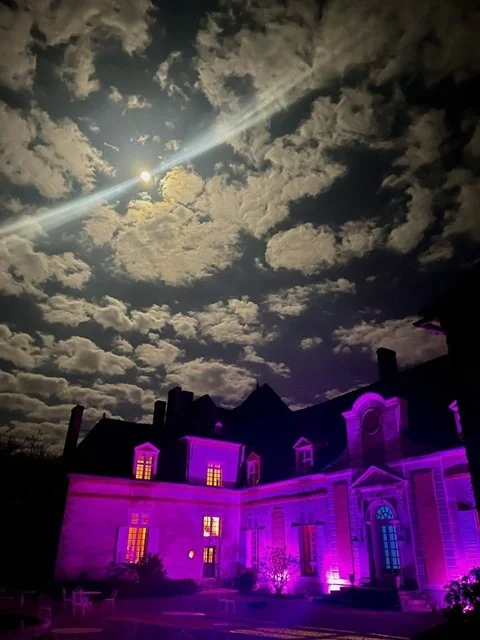
Ghost and fairys are no stranger to this castle
Almost half a year had passed since the prelude of the pilgrimage in the form of the experiences in the garden and the castle. Now, after integrating them and tying off my old life's last loose ends, it was time to officially start the pilgrimage.
I jumped on the train that would lead me first from the place I lived, to a stop in the place I grew up, just to drop me off at the place where the open road of my future waited for me.
In anticipation of my departure, I had been paying special attention again to the culture I was about to leave behind. It seemed to me that landscapes and the people they shelter have aesthetic similarities. These observations found their way onto the first pages of my pilgrim's log. They were driven by an eagerness for the future and a sadness of leaving behind friendships, passions and opportunities — but also by an almost silent voice of snappy relief:
The soul of the landscape expresses itself in every aspect of its being. The soul of the soil ascends into the flora and fauna. The spirit of the sky descends into the people and their culture.
Once I lived where the minds of the people are shaped by the duality of being short-sighted , deep valleys obstructing their sight, and the lure of escaping the dullness by ascending spires of stone into higher awareness. But for most this takes a literal shape. In swarms they climb the mountains, but their minds remain caged in the cave of the city. The ideal brought back into the valley is soaked by the dull minds of the many. It's not that they bring an idea of the higher into the lower so as to inspire ascent , they bring the lower into the higher, and what they carry back from an ascent is only a reflection of their dull minds cloaked in nobleness. Nothing higher could be grounded into practice. And nothing lower could be transcended through the higher. The ever-deepening dullness of downward-spiralling ignorance in the guise of virtue alienated me beyond hope for reconciliation. But no place is without merit , what I loved was the ever-present wind, blowing sometimes even through the clouded minds.
The first place I ended up was where I was born: in the swamplands. Here people are different. Instead of higher realms of awareness promised by arduous ascent, deeper realms of mystery are to be found by diving into the depth of the swamp. But these mysteries are so foreign to the swamp people that even the word 'mystery' is an affront to good manners. Instead of diving into the swamp of their own minds, they bathe in the superiority of their ignorance towards themselves. As a child I swam in many swamps, and they taught me that the swamps are bottomless, and diving ever deeper without travelling to tell others of the mystery eventually leads to being swallowed. What I loved here is that these people had become so resistant to the toxic fumes emitted by the swamps that they built up such a thick skull it could actually contain some practical wisdom. But my lungs never learned to become desensitised, so I departed again before I suffocated.
These words were one of the last dying breaths of a demon that had possessed me for all my life: a feeling of deep alienation from the people around me.
For much of that time I was swinging between feeling either that everything was wrong with everyone around me, or that everything was wrong with me.
In the last years the realisation grew on me that this is not the case. Now I had developed a clear and calm understanding that I just did not fit in the culture around me because everyone was in a dire crisis, a meaning crisis -and I just happened to be particularly sensitive to its symptoms. But now after I could name it, I could relate to my culture in a new way, which paved the way for a break-up without bitterness. I now knew that I could not flourish in it, but I also knew that the meaning crisis wreaked havoc everywhere else. So, my plan was to spend time in communities that tried to rediscover how living together and producing culture in healthy ways could look like. Ultimately my goal was to then one day share with my culture what ways of realising and sharing meaning I had found abroad.
In the last weeks in the mountain city in which I had lived, I forged a knife that I named “Baldur”(click to view the whole knife and the whole myth) in order to symbolise my intention towards the pilgrimage. Baldur was the god of light and joy, who was eventually killed by Loki, a trickster figure, with a spear made of mistletoe. After the god of joy and light went into the underworld, a long winter — Fimbulwinter — ensued. In our modern sense, a meaning crisis. It is prophesied that after the end of the world he will reemerge from the underworld on a white horse, bringing order to a new aeon. I, for one, had had enough of the meaning crisis, so now I wanted to carry Baldur back into the world. As in the castle story, where the myth of Parzival guided my way, now the myth of Baldur would shape my experience in unexpected ways, with the tale of Parzival making a brief reappearance.
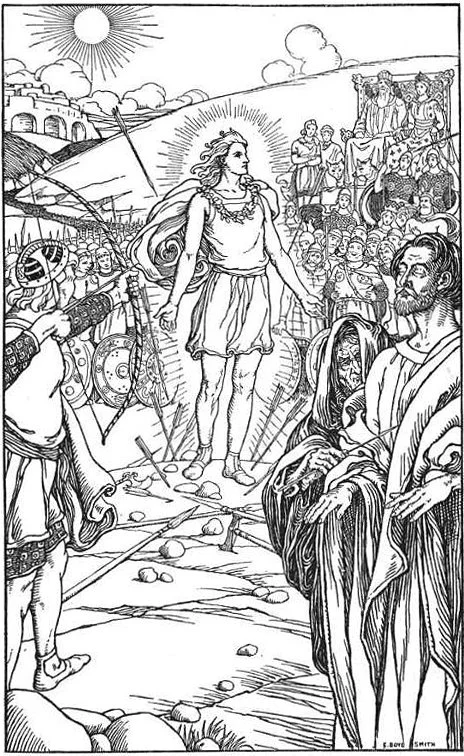
Elmer Boyd Smith 1902.
Baldur being invulnerable before he gets killed by a spear made of mistletoe
Now, after a quick stop in Paris, I was on my way to the community “Feytopia,” located in a chateau in the French countryside, that many people had been pointing me towards. I felt a strange pull to spend time in French castles. In the tale of Parzival, he makes his way two times into the Grail's castle, with a long stretch of being lost in between, and only the second time does he accomplish what he was destined to become. Now, after having been lost in grey city life for a couple of months, I approached the community full of anticipation. With a shimmer of the myths lingering in the back of my mind, the car that had picked me up from the train station approached the long forest road leading up to the chateau from the 1600s. Old withered oaks stood outside it, twisted in such weird ways that it got me thinking the trees somehow had been picking up on some mind-twisting people, doing arcane machinations within the gates. These open, welcoming gates reminded me of the description about the place:
That Feytopia is supposed to be an extitutional community, that welcomes the strangest and most vibrant of walking stories. I got to learn that an extitution, in contrast to the static and inert institution, focuses on the dynamic, mutating elements of social structures.
Over the length of my stay, I came to experience the extitutional structure as a sense of belonging in vibrant transience, that created a longing for something more permanent. The place lived and breathed through the individuals and their contributions, but there was also a constant flux of people, so all relationships were marked by the passing of time.
These people were artists, entrepreneurs, activists, academics, and technologists who were, like me, trying to figure out new ways of how to work, live, and play.
During my stay I came to find that the dynamic between these individuals and the vibrant social sphere was again a perfect place where stories can unfold.
Over the journey so far, the belief had solidified in me that we are deeply enmeshed in a finely knit web of stories, that are nested inside themselves; yes, that we are stories within stories, mirroring themselves like fractals in a Mandelbrot mandala.
This new beginning was also load-bearing in the sense that it as a story felt again like it was a shadow of my history, foreshadowing the rest of my unfolding. The present, provided the inflection point, the prism through which the light of my past broke, just to colour the contours of my future.
The whole setting within this chateau felt at first quite surreal. It was a space apart from everyday life, which paradoxically would provide the grounds for a new kind of everyday life — at least for a while.
It was a true liminal space, a space in between life phases, a space between the broader culture and something that escapes our categories. For me a liminal space always feels like a ritualistic space. A space that mirrors the grandiosity of life in a way that is comprehensible. Time slows down, encounters feel meaningful, and life themes that have ripened over long times of waiting for “it” make their way to the surface, where they can then interact with the people and the place to form new stories. In our modern everyday life, I feel we are so overwhelmed with the minutiae of micromanaging the profane mundanities of isolated existence, that even the loudest of our stories can barely penetrate the thick and distracted skull of ours.
For me, the first story during my stay found its way to me first as a pattern, then a poem, creeping into my awareness and behaviour, reflecting my struggles with belonging.
It was powered through an overflowing amount of anticipation towards the stay. I had left my old life, and even though the new beginning promised a genuinely hopeful future, there was also a fear of getting stuck in the stagnation of ideals not capable coming into contact with reality.
In the first week of my stay, this new beginning mirrored my struggles with belonging that I have touched on earlier. The sense of deep alienation, of not being part, of being in danger of not participating in the unfolding of things, hung over me like a daunting ghost.
In a way it was also a very rational feeling: in order to find new roots, I had to first uproot myself, which left me severed from a lot of my social relations. To fight this feeling, an urge to prove myself arose. I wanted to let the light shine forth that I knew was living inside me after “the Castle.”
I had the feeling I had to accomplish “it” in the matter of the first few days, be it finding partners related to my calling or romantic life, spiritual epiphanies and everything else!
Luckily, the atmosphere at Fey is by its nature what is best described as being flamboyant for the greater good — encapsulated in the community's favourite word: Panache! So my shy, lost and a bit pushy energy did not manage to ruffle any feathers. But the conflict within myself did not float off as a flamboyant feather; it soon led me into a deep blue hole I was intimately familiar with, just to curl up at the bottom like an abandoned child.
A dynamic was playing itself out that I knew very much from childhood: the excitement of being in a new social environment, leading to extravagant behaviour and ultimately to being rejected.
Now I was a man, and my behaviour was neither inappropriate nor did anyone reject me. But the shadow of my past made it increasingly difficult to connect with anyone, thus acting like a self-fulfilling prophecy. One evening I lay on the couch with fading life spirit, when I felt the presence of something best described as a ghost. Someone earlier had told me a story about how she encountered a ghost in the chateau of a deceased lady, and somehow that image snuck itself into my state. I started to write a grim poem about the ghost, but could not finish it. That night I had a dream in which the image of an old tiger, representing fading but still fighting lifeforce, allowed me to finish the poem:
The Ghost
Barely breathing, lying in bright darkness,
spinning around long forgotten memories of an empty space.
Descending from the ceiling, the white ghost of a dead woman
squeezes in the space between the bones.
Her cold presence awakens a faint longing
in a heart wrestling to remember what the warmth of touch feels like.
Slowly melting into her embrace,
the will to live gives way to the promise of endless rest.
Before the final sigh,
an old tiger almost entirely made of skin and bones
drags himself to something once resembling me.
His gaze locks onto eyes that recognise again
that they belong in time and space.
These eyes, my eyes, look back into the reflection of themselves.
No lids dare to blink, as the two pairs of eyes start to merge.
A fusion of something new emerges:
lit eyes transfixed on the moment,
posture erect, supported by gravity,
hands clutched to the chest, clawing away old flesh,
a heart lying bare, dripping with fire,
yearning to spread, being set ablaze.
Now I was ready to drop into the theme of the week, which was also one of the reasons I was eager in the first place to go to Feytopia. The theme was “Stories from the Body.” A lady who worked with personal myth and somatic practices led us through a week of writing exercises paired with nervous system regulation techniques. This was of course highly relevant to my Arrows of Longing project. But I had struggles to fully open up, because I always felt a little frozen in her presence. Funnily enough, she reminded me of a strict teacher I had in primary school. I interpreted it again as a story from my past trying to sneak into the present. One day there was a heavy energy in the room, and we bailed on the planned writing exercise to explore the freeze response. She explained that our nervous system, when confronted with danger, had three responses: fight, flight, and freeze. The latter of the three is often not taken into account, but is all the more prevalent. When our nervous system is perpetually in that state, she described it as a feeling of being stuck in quicksand, not being able to enter into the flow of life. That heavily resonated with me, because it was exactly how I was feeling. Then she guided us through some somatic exercises that must have looked very concerning from the outside. We were supposed to imitate a tiger, sticking out our tongue while making aggressive hissing sounds. I felt the tiger in the poem found its way into reality through that exercise. The exercise was designed to get in touch with “healthy predator energy” to get out of the freeze response. Tentatively I tried the exercise and was surprised that it worked to some degree. Later I shared the poem with someone, which woke my inner fire.
The image of being stuck in quicksand, not being able to enter into the flow of life, stuck with me though. While sitting with it I was suddenly overcome with a fantasy of an old magician whose life by all accounts was a failure. He never was able to really enter the flow of life, and now his death was approaching. But shortly before his passing he invited his village for a show. During it he revealed his final trick, something he had been working on for all his life. Through this trick his whole life shone under a new light. The villagers saw how his life, even though seeming futile from the outside, had guided the village life as a gentle undercurrent in a way, so that it could flourish.
Emerging out of this daydream, I was confronted with the question: should this stay end up not living up to my anticipation, what would be my final trick? What is my final trick? This question got buried somewhere deep in me and simmered there until it would maybe reemerge at the right time.
The second week approached, and with it a new theme: Collaboration Monsters. Every day we would meet and try to hyperstition an idea of a system built upon collaboration that was powerful, even monstrous enough, to beat the Molochian rule of runaway competitive systems.
This theme was also a great opportunity to search for potential allies for the vision I had: building a community that exemplified a holistic way of living, offering alternative education through embodied practices and storytelling, so as to inspire real individuation and connection with one's environment. That vision resonated as a contrast to the competitive, industrial mass-producing of soul-crushed students, who end up as obedient employees.
I got to know people who were genuinely intrigued and on similar paths. But I had the feeling that I was still very early on in my journey, and I needed to do some more concrete planning to be a serious business partner.
Now my feeling of not belonging eased and gave way to the urge of setting other hearts ablaze. I had the opportunity to do so in the form of a presentation on my theories of mythmaking. My thesis: that humanity stands at the threshold of a new stage of consciousness, one that opens up a new relationship to myth, and through it, a new understanding of time.
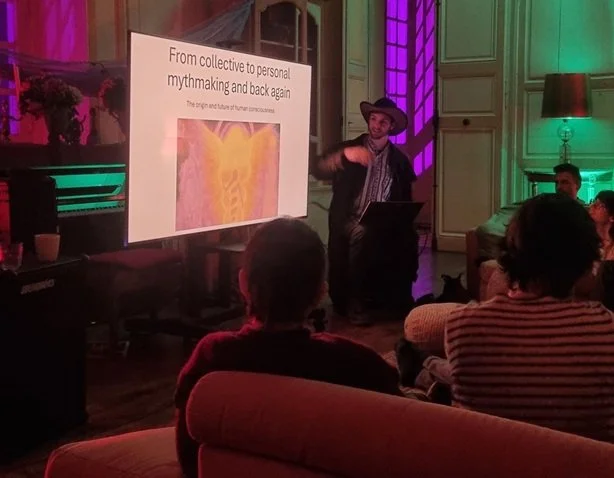
Thursday lightning talks: From collective to personal mythmaking and back again
Myths are the maps of the psyche, and for most of our history they grew between people. Nobody authored them; they were polished through millennia of collective retelling. The long arc of the development of consciousness can be told as a story of gradual separation:
From the oceanic oneness of the womb, through the magical resonance of an animated world, through the heroic drama of myth, through the dialogues of philosophy, all the way into the modern perspectival self that contains the whole world within itself as an image. The gods that once lived in the mountains and the sky now live in our heads, where we mistake them for our own thoughts. But this is also the peculiar opportunity of our moment. Because we have internalised the contents of the world the world so completely, we can now shortcut what used to require an entire tribe and an entire millennium. As individuals we can drop into the collective unconscious, find the symbols that wait there, and project them outward again as the actions and stories that shape the actual future. This was exactly what the Feytopians had taken to call Hyperstition and I Fateweaving. Instead of being trapped in the abyss of our subjectivity, or lost as objective specs of stardust, we can become active participants in the weaving of ourselves and the world.
To underline these theories with action, I was also taking people on long walks during that week. I offered my storytelling practice, in this case advertised as “walking from poetry to prophecy.” This entailed inviting people to marvel through poetry about the actuality of their lives, thus sharpening their receptivity to what the potential of their past holds. Then we would try to convert the newfound potential into a poetic call to action -a prophecy that could be enacted in the present, thereby shaping the new actuality of the future.
I had the feeling that some promising seeds had been planted, and I got a better grasp on how to best guide people through this process, which means to walk upon:
The Golden Line
How can we enter transformation that lasts?
By realizing that our potentiality
lies in the actuality of our past.
But this is only one direction,
the other lies in its reflection.
How can we get pulled in by time,
that is to walk upon the golden line:
Listen to your potentiality,
and give birth to actuality.
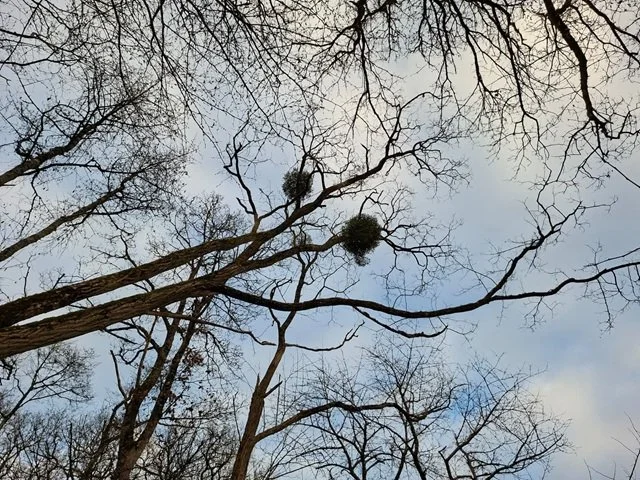
On one of these walks, I realised that the whole forest attached to the chateau grounds was full of mistletoe. The plant in the myth that ended up killing Baldur.
I had been searching for a piece of mistletoe to complete the symbolism of the Baldur knife, even though I was scared to actually harvest it, because by that point I had made so many experiences of these rituals rippling as unforeseen events into my life, that it seemed risky to harvest the very thing that killed the god of light and joy in the first place. So, for now I would just observe them and see if some kind of story emerged that could provide the context for a harvest. Also, most of the mistletoe was quite far up in the tree crowns, and we all know that foolish pride comes before the fall.
Now the weekend approached, and even though the name “Fey” in Feytopia does not mean to relate to the Fay, the mythological trickstery creatures, on the weekends people at this community liked to get a little fairy, following the magic from noon into the deep of the night. Party themes, most times meticulously planned over long hours, ranged from dress-up parties to film scene reenactments to all the weird fantasies people like to indulge in, when the constricting veil of mainstream culture lifts to give way to finding out again what the human imagination is capable of.
This Saturday some people jumped on a train to the otherworld, powered by perception-enhancing supplements. I, of course always interested to see the things between the things, also jumped on the train, that would lead me down paths I did not see coming.
The train picked up speed so fast that soon the life themes that had been simmering in the background bubbled out in the form of poetry.
For the whole week there had been a scent in the air smelling of big changes enveloping the world. Here these people, these fools, even though laughably small compared to the gigantic scale of this storm about to rip apart the old-world order, were all with their hearts and minds fully engaged in finding the eye of the storm.
Ship of Fools
Where is there left to go?
Jump the ship, jump onto the ship!
The ship is leaving, the ship is sinking!
Most will be left behind.
Jump, jump, whoever can.
Who is it that still can stand?
Wrestle with your balance,
don’t give it a chance!
Wrestle it down,
declare it a clown!
The storm is coming, the fire is raving.
Only the victor, the sun warrior,
will survive the blazing smell in autumn storm.
Now, jump, jump, jump the ship!
Jump onto the ship!
The ship is leaving, the ship is sinking, you have to jump!
Rest within the knowledge that you’re the best,
the light-bringer, the fire-kindler.
Jump, jump, jump into the blue,
to extinguish yourself, to ascend anew.
I took a breather, and instead of succumbing to the idleness of brooding over doomsday thoughts, I went out to go on an adventure with two friends I had got to know during my stay.
It started at the fountain in the front of the castle, which I circled lost in thought while waiting for my fellow travellers. What was about to happen was a story that unfolded in real time, over a period of 12 hours. I lived a story, spoke the story into existence, wrote it down, and then told the tale in front of everyone.
What does it mean to live a story? Well, somehow, I felt that the very path on which I was walking led me towards the places in which I could experience what I needed to on that day. It felt like my inner dreamscape fitted itself to the landscape and vice versa.
Descriptive words now fail to describe the magic, so I will let the story paint its own unfolding:
The Dragon's Breath
It seems to me, that I have found myself a hat! Now I have to share the tale that was living inside of it.
Ladies and gentlemen! Dear knights and knightesses! I must refrain from overboarding gratitude that all of you noble, crypto and fairy-beings found your jungly tails into my cave tonight! For long years I've been roaring down here, yearning for a fair chap to confront me, to see what kind of gold may lay underneath a castle.
And so, I slipped my wrinkly tongue down long-forgotten paths, down to a river, one might say.
And to that river some three heroes of old, but yet still unknowingly three fools, were embarking on a journey. At first, they had a hard time to leave their fancy castle; time had made them a little silly, and circling the fountain had made one of them a little mad. To be honest he's been circling that fountain a bit too long just now — instead of circling he might as well have been circumventing it. But not today! Today, we had ourselves a little dragon to seek! And so we embarked, followed by the peace of children's laughter and cake in the morning, on a journey like the aforementioned heroes in the stories of old. One was a fair-haired lad with a proclivity to seek out the high grounds. We shall name him Merlin. The other, with dark, golden, violet even joy wrinkling itself around his experienced expertise of the deeper pleasures of life, also known as Mr. Simpson. And one of them who sometimes only has a faint idea of what might yet become of him — the latter of the three, by some also known as Nobody, had a deep longing, of course, to find all the deepest quagmire beyond the rightful path. His longing for paths not yet seen pulled them along a path of long-forgotten whispers, some say only dragons' tongues could whisper.
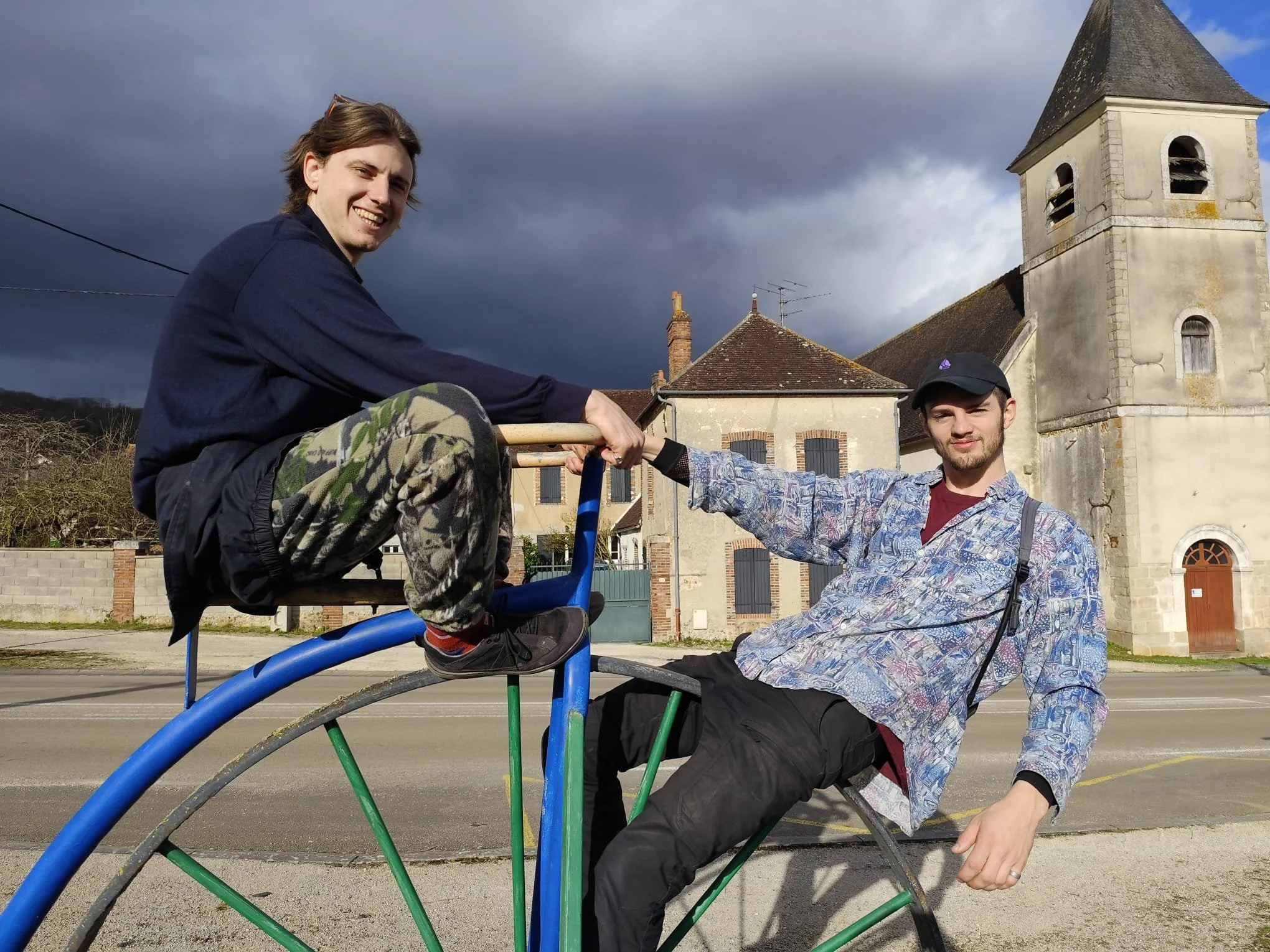
Their first stop was a little village. The bricks of its old history already started crumbling. Of course, like in any good old village, the two most important symbols gathered right beside one another. On the one side there was a penny-farthing, on the other an old church.
The Molochian penny-farthing attracted the fair-haired Merlin lad by luring him to see distant lands yet to be conquered by the power of acquiring capital. Mr. Simpson swiggelt his swagger around the church — but even though it seemed beautiful from afar, from up close its crooked crown could not entertain Mr. Simpson's taste of noble futures.
Meanwhile, Nobody ventured into the gutters of the village: an old bus stop, a real wretched place, worn out by seeing people like the times come and pass. But from this place Nobody had the intuition that things can't go on the way that things have found their way. So he pushed Merlin off his high horse, encouraging him to seek out another high ground from which to view the future.
But where to go now? Of course Nobody had a clue! Really, Nobody wanted to take the thorny path leading them straight into entanglement of the unamusing sort.
Thank God that the other two were not so mad as him. With wiggling hips and a far-seeing eye, Merlin and Mr. Simpson guided Nobody safely through this threshold of crumbling civilisation. Trying to found a new church that was a bit less crooked than the old, on a place not so torn apart by Molochian spirits, they slithered their way towards a future they did not yet dare to dream of.
Getting pulled further along the story, the bunch of them were trying to remain grounded in high grounds of a deeper view of all the lands, while simultaneously trying to enjoy the present. To handle all of this at the same time was of course a lot, and so Nobody, in a sheer act of thinking he might have already been somebody again, tripped up — and if not for pure luck, his face would have been acquainted with the harsh reality of a stony way.
Nobody was of course a little embarrassed, and tried to explain his trip-up to the others by over-indulgingly trying to engage in some stories past. Interrupting before he could further entangle himself in his endless talytangles, Mr. Simpson pulled up a reed and painted, with the help of Merlin being the old trusty wizard, a rainbow in the sky. They shouted in unison: READ BETWEEN THE REEDS. And Nobody looked and read a sign that even the best of ideas could not have read themselves if they had not read between the reeds:
A rainbow strung between a castle and an abyss, strung between longing and faith, between doom and gloom.
But before Nobody had the chance to dwell for too long on this sight, Merlin jumped off, shouting some funky prophecy from the nearest shithole hill. To give him his due, he actually managed to see a bridge spanning over the river of time! Oh, what a happening — because that is what they needed most. A bridge to cross longing to faith, doom to gloom.
They rushed towards it to seek shelter, for it seemed to them a storm was coming. As soon as they arrived, Nobody already wanted to entangle himself in his story again. He had already pulled out his magic wand, digging around his bag in search for pen and paper, when suddenly Mr. Simpson, always trying to find deeper pleasures in the hidden corners, came forth with a hat that was buried in a corner deep from underneath the bridge!
Well, it turns out Nobody had been searching for a hat for all his life. And he had said that one fine day, if he should be worthy enough, a rusty, trusty, old French hat would find its way to him. And now it did!
Gathering his things between his bewilderment, holding his magic wand in the left, the hat in the right, he slowly put it on his head. To everyone's unsurprise a blue bird flew through the pillars of the bridge in that same moment. Now Mr. Simpson and Merlin were witness to Nobody proclaiming the birth of the new age with the words:
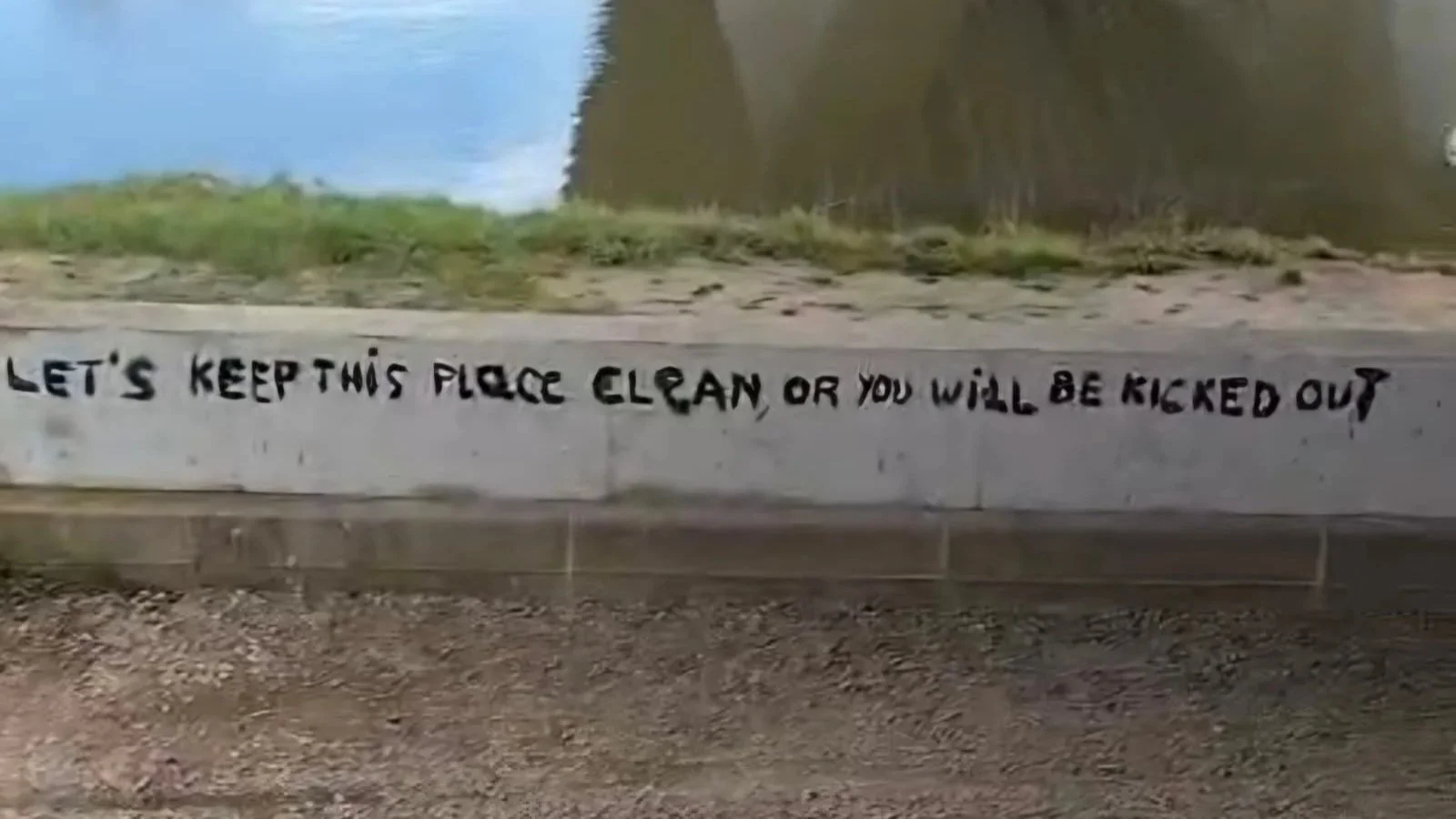
“I did not expect to be witnessing this moment in my lifetime, but here we find ourselves under a bridge, our view enveloping distant lands, marvelling over the old scriptures reading: ‘We need to keep this place clean or else we will be kicked out!’ And indeed, we want to make this place even more beautiful — because why else would we wander on this beautiful earth? What is our purpose but to make it more beautiful? So, everyone! Grab your purpose pencils, craft your spell and cast it into the future, so that one day you might hear your calling echoing back from across the bridge.”
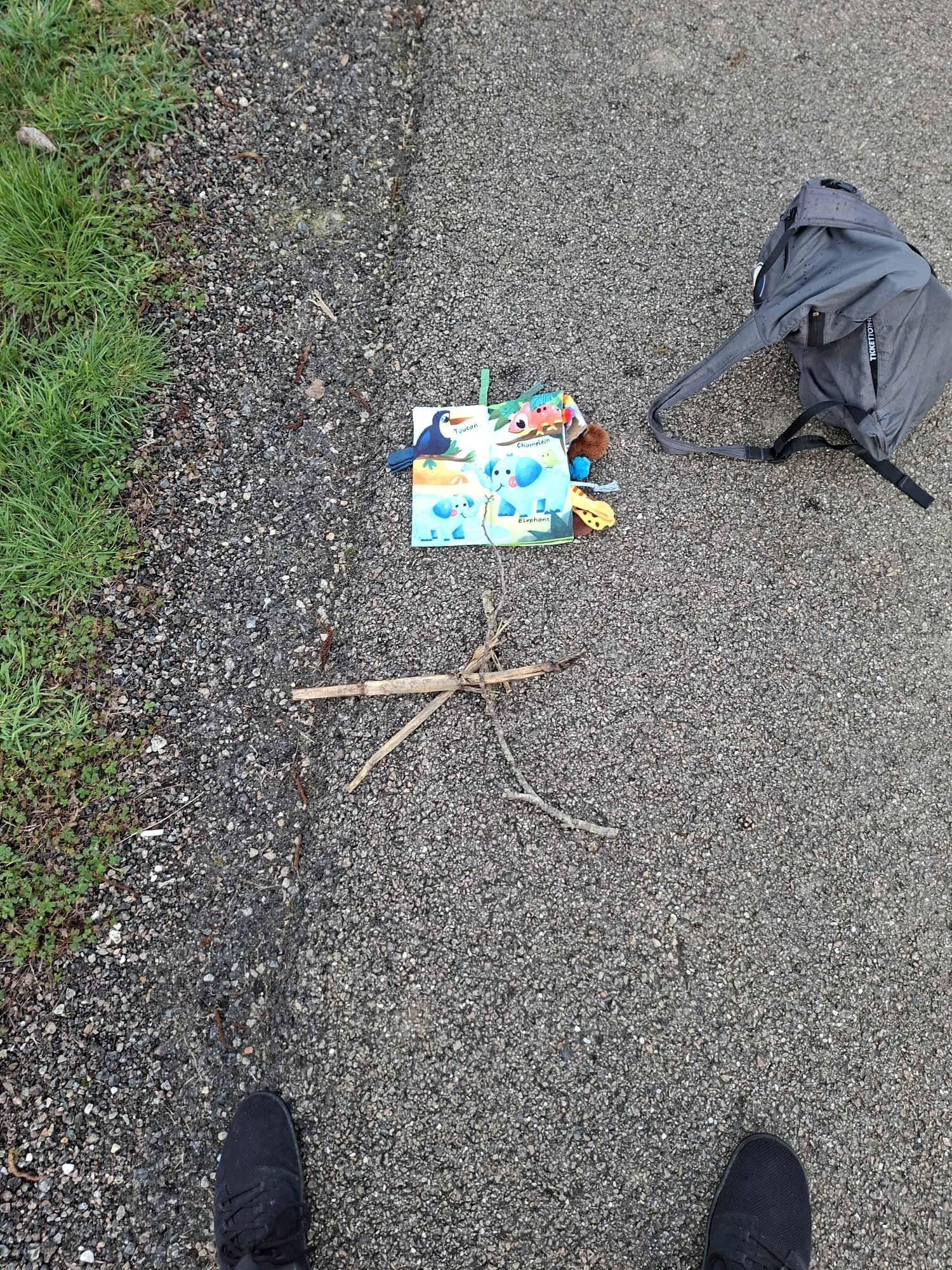
The three of them wanted to celebrate this by erecting the new church. The land still was barren, so they helped themselves with some thorny sticks to erect an almost mighty symbol: three sticks joined in unison!
Nobody of course was a little bit too much enveloped in his story envelope and immediately went off again, searching jungly tails on some jungly trails. And found them he did. Right on the border of some utopic vision, he pulled up a box of rotten cuddle toys — beautiful in his view, but really a distasteful bunch of jungly tails, jiggling, wobbling tails and trunks and legs and antennas, all swirling around each other.
He did not know what to make of it. Yet another sign?! Merlin was lured in as well, but by the sunset, to follow his utopic vision of unreachable futures. Only the good sense of instinct by Mr. Simpson — to find themselves a party, maybe in a castle — convinced the two to leave the utopic vision and their jungly tails on jungly trails behind. The hat was found, a story within it; so now they could just go back and tell the tale — the end?!
Well, not so fasssst: whispered around their footsteps, luring them again astray. They forgot their way: the who and the what and the why, their sense of yours and my. Deep into the ground of some not-to-tell tale, for down beneath it there might lay the essence of all ails that better remain hidden in forests, where just the mystery of a whispery rumour might escape.
Mr. Simpson could not be bothered by the slippery snake's lure; also, Merlin felt his times of dragon-fighting were long ages past. So they found their way back again to the castle of earthly delights.
But Nobody — well, Nobody got lost, and Nobody entered the cave. The deep, the birthplace of the nameless face. A dangerous place; uhh, even the rumours of what kind of taily beings breathed their dragon's breath within them would let everyone know that it is Nobody's right to enter!
He armed himself with a knife he forged in yet another story from pure light, and his trusty magic wand. For a short while he thought of leaving his Arrow of Longing, in front of the cave, so that he would find his way back again. But he took them with him into the darkness, because he knew that this time he needed to go fully down, down, down.
So, he ventured deep within its dripping sounds. He knew that very sound of sometime ago, within another story in another castle: it was the endless dripping of the endless drop, yearning to drop onto the seed of a new storied time. But this time it was not a futile dripping, for he lifted his hat to greet his fellow dragon — and to Nobody's surprise, a droplet fell in it, giving birth to the Story:
Mirroring itself into its deepest centre:
Merging, fighting, learning from itself,
because it is its own lover, enemy and mentor.
Fools, heroes, dragons, kings,
with bells, swords, crowns and wings.
All of them crawling out a swirling hole,
pushing towards finally being whole,
just to end up in the endless becoming
within the centre of the mandala.
Knowing what just had happened, he gathered himself, falling into a deep rest, almost falling into temptation to hoard the gold that was now in his possession. But the bladed light in his hand reminded him of a life of light beyond the cave. Also, his magic wand waited for a spell to be cast. So, he placed his storyteller's head within his newfound hat and enveloped the cave with first hissing, then roaring, fiery words:
Telling a tale that would finally lift the veil between body and mind, to see what's hiding between, the in-there and the behind!
The echoes from his calling finally echoed his newfound call, that was to go out and tell the tale: that it is possible! With the help of luck, some good British lads and a little magic, to find yourself a hat, and within that hat, a shiny little story.
But this shall also be a cautionary tale, because Nobody entered the dragon's cave, and Nobody remained in it. He tried to walk out, but his dragon's feet were too deeply entangled in his own story's web, so that he remained blissfully forever caged in the centre of his own mandala.
But someone emerged from the cave. He did not yet quite know who he was, for it seemed he stood there for a long time.
Some say he was gone for two whole nights! But then he remembered who he once was called:
Daniel — the one that only God can judge. But now, dusting off some old dust from an adventure he did not remember, he knew himself from now on also by his second name: Erik! The mighty one, the earth-shaker!
Oh, how good it feels to finally be someone again.
What a pleasure it has been, my friends. I hope I shook your earth a little bit. Please spread the word that by the craft of words, you might find yourself in a story winding itself to places where your deepest longings might just have an intuition of.
-profane encounters in a profound state.
The almost mighty symbol with the jungly tails book next to it, the penny farting with the old church in the background, and the old scriptures
I spoke the last word and laid down on the sofa: the train ride was over and the journey was captured. Only that evening did I learn that on this very day the Iran war had started. I did not know what to make of it. I was not surprised either, the whole day felt like an earthquake anyways and I faintly remembered proclaiming the new age, so it seemed fitting.
I felt lucky being able to tell the story in the first place, because unbeknownst to me, the cave I had uncovered was strictly off limits.
It used to be a place where people gathered for parties, mischief and fancy rituals, but at some point, stones started to fall from the ceiling. I was told that I should under no circumstance speak of the cave, because it was potentially in danger of collapsing. My original plan had been to guide everyone down to the cave and tell the tale where it was first spoken, but that was no option anymore. Luckily, in my story Nobody entered the cave, so I was allowed to tell it above ground.
It seems to me that the story had pulled on all the threads that slowly showed themselves during the two weeks, just to weave them into a transformative experience in which my relationship with the world was renegotiated.
Now, with my newfound storyteller's hat, I felt a sense of initiation. At first, I did not quite know what to make of the story, of course there was a fear of being perceived as having gone off the deep end by the others, but really, I felt like I was now someone again, who could enter into real honest contact with others.
The struggles with belonging in the beginning of my life, and in the beginning of the stay at Feytopia, now felt exemplified by the Nobody character. A social nobody who had flipflopped all his life between grandiosity and inferiority. Because Nobody had no real responsibility, Nobody thought he could speak for everybody, because he had no voice himself. But the cave revealed to him that Nobody's mirror image was a powerful dragon.
On this day I uncovered the meaning of my second name:
Erik was now one part in me, who was in touch with all these archetypal energies, someone who feels he is destined for something great. At first, I played around with the thought of adopting that name instead of Daniel, but then I realised that this would be missing something. My first name Daniel means being judged by God, and therefore being put in the proper place in the unfolding of things. The two names together could form a pair balancing each other out. Erik could strive for greatness, and Daniel could bring this into humble relation with his surroundings.
Greatness instead of grandiosity, and humbleness instead of inferiority, seemed something worth carefully integrating and striving towards. Now I felt it was time to rest and integrate all this maybe wise madness.
The next week started with some people leaving, like always with a piece of everyone's heart. Also, some new people were welcomed.
Each Monday evening everyone would gather in the dining saloon, to share a quick introduction about themselves and what their intentions for the week were. A lady who had just arrived, but had already been here a couple of years earlier, shared something that led to some people dropping their food back to the plate: “I would love to have a party — down in the cave!”
The groans of people who thought that she had spilled the tea about this delicate topic were interrupted by the owner, who told me, to my great surprise, that just that day an inspector had come to have a look at it and had given a green light. For years the cave had been closed, and now just after my experience in there, it opened its gates again. With that, my intention for the week was clear: organising a storytelling event in the cave!
The rest of the week quickly passed by, between interesting castle conversations and joyful forest dwellings, where I was continuing to invite people to dive into their stories.
Then a new Saturday arrived, with everyone keen to convert the castle again into a madhouse. The theme for this evening: a fairy absinthe party!
But I had already experienced my fair share of madness, so I spent the day in the forest, where finally the meaning of the mistletoe in the Baldur myth dawned on me. So, I carefully climbed a tree and harvested some.
Baldur, the god of light and joy, was also a symbol for the sun. And the sun a symbol for the human ego, separating itself from the great sea of the unconscious. In order to be part of the cycle of nature, it needs to set again, to find humility, humus, its way under the ground, just to rise again.
I set out on my pilgrimage to bring again the light and joy into the world; the mistletoe should now be my reminder of mortality, to keep me grounded in the knowledge that I am just a mere mortal. I now saw the story arc that had been unfolding over the last three weeks, and could now encapsulate it in a final poem:
The Sun
Imagine listening to a longing from beyond the rain,
from so deep you might have lost sight from where it came.
Slowly creeping like a vine,
it wound itself from within, to time.
A new time, a new dream that wishes to not be a dream anymore.
And then: I am.
The sun listens to its own heart beat spinning, ever faster, to a new beginning,
But longing turns into yearning:
It rises, it races to its might,
but if it burns to bright,
its light will turn to plight.
At the peak it blasts from everywhere,
burns with love -but only for itself.
It yearns with raging fire,
blinding all those that wanted to admire.
And then: I was.
It plunges back into the deep,
first blue then dark,
wanting to bury in shame
it’s just newfound spark.
Now the ashes of the world,
start to spread the word:
That a sun not seeing past its light,
knows not yet of its truest might:
That is by knowing it’s proper place and time,
it can help to make a new age shine.
That is to not turn everything into a blast,
but to shine on things to make them last.
And then: I will be again and again.
The hero in mythology is oftentimes also conceived as a solar figure: he is always involved in his hero's journey of descent into the underworld, finding a treasure and returning to the village. It is a beautiful mythical structure, but I have come to believe it is an adolescent myth. One of struggling with separation and finding identity. Our culture has been enveloped in it for a long time, and much has come of it, but now I think it's time to find myths representing adulthood. I, now slowly rounding out my third decade, also feel called to move beyond this structure. I think our culture has become a bit bored by the endless second-hand reports about the underworld, but the confrontation with the things dwelling there is more important than ever. So now it is time for the whole village to dare the descend.
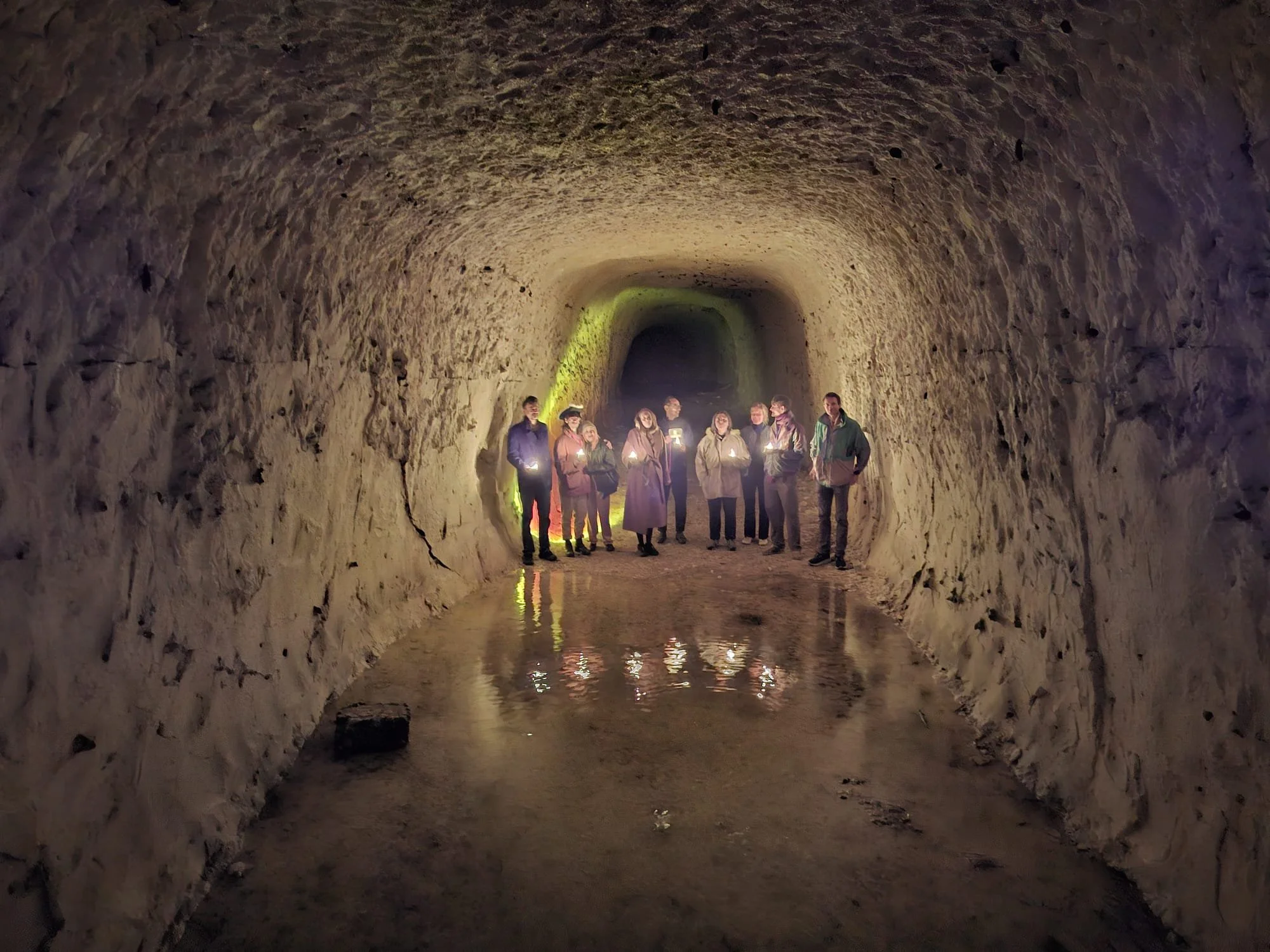
In the earths womb
To take a step in that direction, I invited the “village”, to go down into the “underworld” with me. We made a procession, with everyone carrying a candle, to share our deepest and dearest stories in the womb of the earth. People sang lullabies their mothers sang them as a child, confessed heartfelt experiences they previously shared only in the form of comedy and encouraged us through poems to live with our hearts on our tongues. It felt like a non-doctrinal worship of something holy not to be named, beyond the crumbling religious institutions and molochian systems, that were much talked about in these weeks.
After everyone had finished, I got to tell at last the Dragon's Breath where it was originally born. At the point in the story where, the dragon envelops the cave with roaring fiery words, a stone fell from the ceiling and someone ran out in fear. I took it as a testament to the dragons power and a sign to be careful with letting the dragon speak.
Just as I was about to leave the cave, I remembered that I had something in my pocket, something in me had remembered a faint memory of a day fantasy about some kind of final trick. I had an envelope and a coconut with me. A woman, with whom I had become good friends, had been exploring her story with me (and I mine with her), and in her story a coconut played a pivotal role; it represented something she was longing for. I gave her the envelope to let her write “to myself” on it. Then I slipped the coconut inside without her seeing it, and hid it in the cave. I just told her that I had just performed my final trick, trusting that she would find it if her story would lead her into the cave.
My final trick wasn't about my story anymore, but about handing the torch to the next person. A couple of weeks later I got a message from her, telling me she had found something weird.
With that, I felt the story of Feytopia had come full circle.
Like Parzival, my second time finding my way into a French castle proved fruitful.
The hat was found, and the endless dripping sound in the cave had finally given birth to a story, that I now want to invite and share with everyone I encounter.
I felt initiated and ready to really begin the pilgrimage.
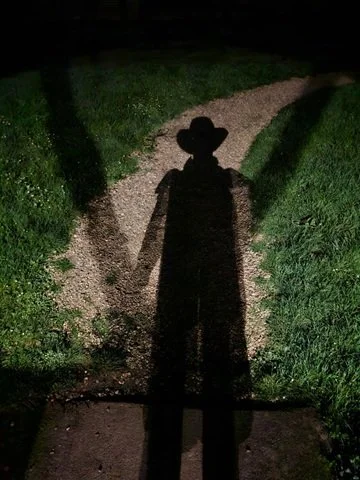
The shadows of a newly created past on the open road ahead.
